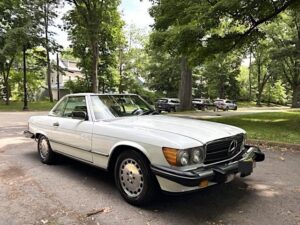
Memorial Day weekend marks the unofficial start of summer — and for many of us in Northern New Jersey, that means packing up the car and hitting the road. Whether you’re heading down the Garden State Parkway to the Shore, taking the Turnpike toward the Poconos, or driving up to New England, your car is about to work harder than it has in months.
If you drive a European vehicle — a BMW, Mercedes-Benz, Audi, Volvo, or Volkswagen — there are a few things worth checking before you load the cooler and the beach chairs. European cars are engineered for performance, but that engineering also means they have specific maintenance needs that can catch you off guard 200 miles from home.
Here’s our road trip checklist — the same things we look at when Montclair and Upper Montclair drivers bring their cars in for a pre-trip inspection.
1. Tires: The Only Thing Between You and the Road
This is the single most important item on the list. New Jersey roads — between winter potholes and construction zones — do a number on tires. Before any road trip, check three things:
- Tread depth. The penny test still works. Insert a penny head-first into the tread grooves. If you can see all of Lincoln’s head, your tires are worn below 2/32″ and need replacing before a long drive. For highway driving at speed, we recommend replacing at 4/32″ — especially on European performance tires that are designed for higher grip thresholds.
- Tire pressure. Check all four tires plus your spare when the tires are cold (before driving). The correct PSI is on the sticker inside your driver’s door jamb, not on the tire sidewall. BMWs and many newer European cars run higher pressures than domestic vehicles.
- Spare tire or run-flat status. Many European cars no longer come with a spare. BMWs, for example, use run-flat tires that let you drive about 50 miles at reduced speed after a puncture. Know what your car has before you’re on the shoulder of the Turnpike trying to figure it out.
If your TPMS (tire pressure monitoring system) light has been on and you’ve been ignoring it, now is the time to address it. We see this a lot — and a quick tire service visit can save you from a blowout on the Parkway.
2. Fluid Levels: What’s Under the Hood Matters
European engines are precision instruments. They don’t tolerate low fluid levels the way some other vehicles might. Before a Memorial Day road trip, check:
- Engine oil. Many European cars burn oil by design, especially turbocharged BMWs and Audis. Check your level on the dipstick or electronic gauge. If you’re a quart low now, you could be two quarts low by the time you reach your destination.
- Coolant. Summer heat plus highway speeds plus stop-and-go traffic at toll plazas equals stress on your cooling system. European cooling systems use specific coolant formulations — don’t top off with generic green coolant from the gas station. If your coolant is low, bring it to us so we use the right spec.
- Brake fluid. Brake fluid absorbs moisture over time, which lowers its boiling point. If your brake fluid hasn’t been flushed in two years, it may not perform well during hard braking on a steep downgrade or in heavy holiday traffic.
- Washer fluid. Seems minor until you’re behind a truck kicking up road grime on the Turnpike and you can’t see. Top it off. It takes 30 seconds.
If you’re not sure when your last general maintenance service was, that’s a sign it’s time for one.
3. Air Conditioning: Test It Now, Not on the Turnpike
Nothing ruins a road trip faster than a dead AC system in 90-degree traffic. European climate control systems are more complex than most — they use cabin air quality sensors, dual-zone or tri-zone controls, and refrigerant specifications that differ from domestic vehicles.
Turn your AC on full blast for five minutes before your trip. The air should be cold within the first minute or two. If it blows cool but not cold, or if you notice a musty smell, there may be a refrigerant leak or a cabin filter that’s overdue for replacement. Both are quick fixes if you catch them now — and expensive inconveniences if you don’t.
4. Brakes: Winter Salt Takes a Toll
If you’ve been driving through a New Jersey winter, your brake system has been exposed to months of road salt, moisture, and temperature swings. Even if your brakes feel fine during your normal commute, highway driving puts different demands on them — sustained high-speed braking, heavy traffic stops, and loaded vehicles (packed with luggage, passengers, and gear).
Signs your brakes need attention before a road trip:
- Squealing or grinding when braking
- Vibration or pulsing in the brake pedal
- The car pulling to one side when braking
- A brake warning light on the dashboard
- Longer stopping distances than you remember
European brake pads, especially on BMWs and Mercedes, use softer compounds that wear faster but provide better stopping power. That trade-off means they need inspection more frequently than you might expect.
5. Battery Health: Heat Kills Batteries Faster Than Cold
Most people think of battery failure as a winter problem. In reality, summer heat accelerates battery degradation. A battery that barely survived winter may fail completely in the heat of a rest-stop parking lot in July.
European cars are particularly sensitive to battery health because they have more electronic systems drawing power — from the infotainment and navigation systems to the adaptive suspension and parking sensors. A weak battery in a BMW or Audi can trigger a cascade of warning lights and put the car into a reduced-power mode.
We can test your battery in about five minutes. If it’s marginal, replacing it before your trip is much better than calling for a jump start at a rest area on the Garden State Parkway.
6. Belts, Hoses, and the Stuff You Can’t See
The serpentine belt, coolant hoses, and other under-hood components deteriorate over time — and New Jersey’s freeze-thaw cycle accelerates the process. A cracked hose or fraying belt might hold up fine during your 15-minute commute to Montclair but fail during four hours of sustained highway driving.
This is one of those areas where a professional inspection makes a real difference. These components are hard to assess visually unless you know what you’re looking for, and many are tucked into tight spots in European engine bays that aren’t exactly DIY-friendly.
7. Lights and Wipers: Easy Checks, Big Impact
Walk around your car and check every light: headlights, taillights, brake lights, turn signals, and reverse lights. Have someone stand behind the car while you tap the brakes. A burned-out bulb is a ticket waiting to happen — and on a holiday weekend, there’s more enforcement on the road.
Check your wiper blades too. Summer thunderstorms come on fast, and worn wipers turn a downpour into a white-knuckle experience. If they streak or chatter, replace them. It’s a $30 fix that could prevent an accident.
Build Your Emergency Kit
Even a well-maintained car can have an issue on a long drive. Keep these in your trunk:
- Phone charger (and a portable battery pack)
- Jumper cables or a portable jump starter
- Flashlight with fresh batteries
- Basic first aid kit
- Bottled water and non-perishable snacks
- A reflective warning triangle or road flares
- Your roadside assistance number (check if your BMW or Mercedes warranty includes it)
- A printed copy of your insurance and registration (in case your phone dies)
NJ Turnpike and Garden State Parkway Tips for the Holiday Weekend
A few things worth knowing if you’re driving the major NJ corridors this Memorial Day:
- Leave early or late. Friday afternoon and Saturday morning are peak departure times. If you can leave Thursday evening or early Saturday, you’ll avoid the worst of it.
- Know your rest stops. The Turnpike rest areas (named after famous New Jerseyans — Vince Lombardi, Molly Pitcher, etc.) get crowded on holiday weekends. The service areas between exits 6 and 11 tend to be the busiest. Plan your fuel and bathroom stops accordingly.
- Watch for construction zones. NJ road construction is a constant. Fines double in construction zones, and the lane shifts can be abrupt. Keep your speed down and your eyes up.
- E-ZPass saves time and money. If you don’t have one, get one before the weekend. Cash toll lanes are significantly slower, and some toll plazas are cashless.
- Speed enforcement increases. State Police ramp up patrols on holiday weekends. The speed limit is 65 on most of the Turnpike, and they enforce it — especially in the truck lanes.
Why a Professional Pre-Trip Inspection Beats the DIY Approach
You can absolutely check your own tire pressure, top off your washer fluid, and test your AC. Those are good habits. But a professional pre-trip inspection covers the things you can’t easily check yourself — brake pad thickness, suspension wear, cooling system pressure, battery load testing, and the condition of belts and hoses that are buried deep in the engine bay.
European cars in particular benefit from technicians who specialize in them. The diagnostic systems on a BMW or Mercedes are different from a Honda or Toyota. A code that means one thing on a domestic car means something entirely different on a European one. At Foreign Aid Inc, we’ve been working exclusively on European vehicles for over 45 years — we know what to look for because we see it every day.
A pre-trip inspection takes about 30 minutes. We’ll check everything on this list and let you know if anything needs attention before you go. If your car passes with flying colors, you’ll have peace of mind. If something needs fixing, you’ll have time to address it before you’re stuck on the side of the road.
That peace of mind is also what makes our NJ State Inspection service popular with drivers who want to know their car meets every safety standard before a big trip.
Schedule Your Pre-Trip Inspection Before the Weekend Rush
Memorial Day weekend is one of the busiest driving weekends of the year. Don’t wait until the Thursday before to realize your brakes are grinding or your AC isn’t blowing cold.
Call us at (973) 746-1010 to schedule a pre-trip inspection at Foreign Aid Inc, 207 Bellevue Ave, Upper Montclair. We’ll get your BMW, Mercedes, Audi, Volvo, or VW road-trip ready — with a free loaner car if you need to leave it with us, and a 1-year warranty on any work we do.
45 years of keeping Montclair’s European cars on the road. Let’s make sure yours is ready for the long weekend.